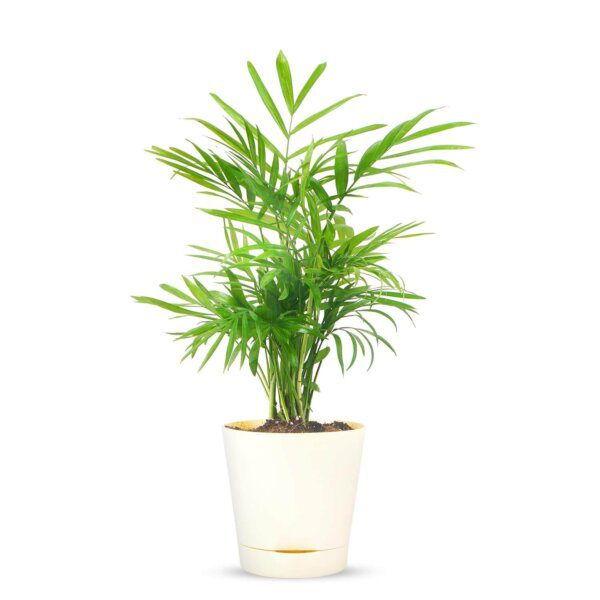
The Areca Palm (Dypsis Lutescens), also known as the Butterfly Palm, is a popular and elegant houseplant renowned for its lush, feathery fronds that bring a tropical ambiance to any indoor space. It’s also celebrated for its air-purifying qualities, though it requires specific care to thrive.
☀️ Sunlight: Areca Palms need medium light. While they can tolerate some direct sunlight, diffused light is preferable for a luscious green appearance and to prevent leaf burn. An east-facing window or a spot a few feet away from a south or west-facing window is often ideal. Too much intense, direct sun can cause the leaves to look bleached or scorched.
💧 Water: Water the Areca Palm when the topsoil looks dry to the touch. It’s crucial to find a balance between overwatering and underwatering.
Water Quality: Hard water or fluoride in water can cause the plant to look burnt. If possible, use filtered water, rainwater, or distilled water.
🪴 Potting Mix & Fertilizing: The plant prefers moist, well-draining soil. You can amend standard potting mix with perlite or coarse sand to improve drainage. Areca Palms are heavy feeders, so compost should be added every three months. Fertilize with a balanced liquid fertilizer during the growing season (spring and summer). Fertilizing should be avoided during the dormancy period in winters.
🌡️ Temperature & Humidity: Areca Palms do not thrive in cold temperatures; the ideal range is between 20°C to 35°C (68°F to 95°F). They appreciate high humidity, mimicking their natural tropical environment. If your indoor air is dry, especially in winter, consider misting regularly or placing the plant near a humidifier. Protect them from cold drafts.
✂️ Pruning: It’s important to prune browning leaves to maintain the plant’s appearance and health. Small browning fronds can often be ripped away easily at the base if fully dead, or cut cleanly with sharp, sanitized scissors. For larger browning leaves, cut them off close to the main stem.
🌱 Propagation: Spring is the best time for propagation. The most effective method is to separate “babies” (offsets or suckers) from a pot full of the plant when roots are visible on the offset. After propagation, water the newly potted plant once every 24 hours for a short period to help it establish, and keep it away from direct sunlight during this recovery phase.
🪴 Planter Size & Repotting: Areca Palms do well in smaller pots and do not need very large planters. Repotting is necessary about once a year if roots are coming out of the drainage holes or the plant appears root-bound. However, avoid going directly to a much larger pot, as this can lead to too much soil retaining excess moisture and increasing the risk of root rot. Go up only one pot size at a time.
💰 Investment Tip: Investing in a small Areca Palm is recommended as taller ones are expensive, and you can let it grow to your desired size over time.
Troubleshooting Common Areca Palm Problems –
🍂 Brown Tips on Leaves (Both Older & Newer):
Signs: Brown tips on both older and newer leaves, which may appear water-soaked.
Cause: This is a classic sign of overwatering. The plant struggles to evaporate excessive water, leading to burst leaf cells. If left untreated, the root system can rot.
Solution: Immediately stop watering. Move the plant to a bright, well-ventilated area to dry the soil. Once about 80% of the soil is dry, water lightly. For severe cases with suspected root rot, gently remove the plant, trim rotted (mushy, black, foul-smelling) roots, and repot with fresh, well-draining soil, watering minimally afterwards.
Another Cause: Also can be caused by hard water or fluoride in tap water.
🍂 Browning Older Leaves / Yellowing Lower Leaves / Wilting:
Signs: Browning on older or semi-older leaf tips and margins. Lower leaves may turn yellow and fall off. The plant can look wilted with older leaves browning and drying out. Prolonged issues can lead to shrinking of the base and stems.
Cause: These are strong indicators of underwatering.
Solution: Improve your watering schedule. Areca Palms prefer to dry out somewhat between waterings; water thoroughly when 50-60% of the soil feels dry. During their summer growing period, they prefer consistent moisture. In winter (dormancy), reduce watering. Always check the top 2-3 inches of surface soil moisture before watering.
🦠 Root Rot:
Signs: Plant wilts even if the soil is moist. Roots appear mushy, black, or smell foul. Often accompanied by brown, water-soaked leaf tips or overall decline.
Cause: Primarily prolonged overwatering and poor drainage.
Solution: See the detailed solution under “Overwatering” above. This includes drying out the soil, potentially using a diluted fungicide solution, and for severe cases, trimming rotted roots and repotting.
🌿 Stunted Growth / General Stress:
Signs: Plant not growing, overall unhealthy appearance.
Cause: Can be a general sign of various issues like soil compactness, lack of nutrients, or improper light/watering routines.
Solution: Loosen compact topsoil to improve watering and aeration. Ensure regular fertilization during the growing season. Review and adjust your watering and light according to the main care tips.
🟤 Leaf Spots / Red Dots (Disease):
Signs: Unusual spots or red dots appearing on the foliage.
Cause: Can indicate fungal attacks or other bacterial diseases, often exacerbated by stress (e.g., too much direct sun, improper watering) or poor air circulation.
Solution: For fungal attacks, apply a fungicide every one to two months. For bacterial diseases, it may require removing the affected part of the plant immediately. Ensure good air circulation by not placing plants too close together.
🐛 Pests (Aphids, Mealybugs, Mites, Whiteflies):
Signs: Visible insects, sticky residue on leaves, distorted new growth, or fine webbing (mites).
Solution: Deal with pests using strong water pressure to dislodge them (especially for aphids) or apply neem oil spray. Regular inspection helps catch infestations early.
By understanding these signs and adjusting your care routine accordingly, your Areca Palm will thrive and bring lush, tropical beauty to your home!