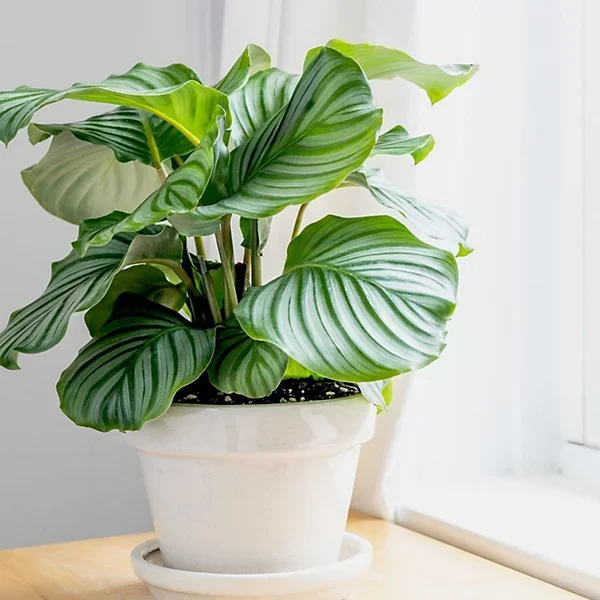
Calathea plants are highly sought after for their stunningly vibrant and uniquely patterned foliage, which comes in a wide array of colors, stripes, and spots. Known for their “prayer plant” habit of raising and lowering their leaves throughout the day, Calatheas are exquisite but considered high-maintenance and not recommended for beginners. They rarely flower indoors, so their beauty primarily lies in their captivating leaves.
🌿 Before You Buy / Initial Care: When purchasing a Calathea, ensure the leaves are free of black spots, brown edges, yellowing, or any signs of spider mites. Protect the plant from cold temperatures (below 16°C or 60°F) when transporting it home, as they are very sensitive to cold.
☀️ Sunlight: Calatheas thrive in medium to bright indirect sunlight. Direct sunlight, especially harsh afternoon sun, can easily damage their delicate leaves, causing them to fade, scorch, or lose their vibrant patterns. A north-facing window is ideal in the northern hemisphere (like Howrah, West Bengal). If placing in east or west-facing windows, ensure direct sun exposure is limited, perhaps by using a sheer curtain. For south-facing windows, move the plant deeper into the room to filter the light. More indirect light generally promotes faster and healthier growth.
💧 Water: Calatheas need consistently moist soil but should never sit in water. Water when the top 2.5 cm (1 inch) of soil feels dry to the touch. In winter, as the plant goes dormant, allow the soil to dry out a bit more, up to 5 cm (2 inches) deep, before re-watering. Always ensure excellent drainage from the bottom of the pot. Self-watering systems can be an excellent way to provide consistent moisture without the risk of overwatering.
🪴 Potting Mix: A well-draining mix is crucial for Calatheas. A recommended blend is 80% standard planting soil and 20% perlite or pumice for good drainage and aeration. Planting in pure pumice is also an option, provided it’s mixed with something that has good cation exchange capacity, like vermiculite or clay, to retain some nutrients.
🌱 Fertilizer: Calatheas require consistent fertilization during their active growing period (typically March to October in the northern hemisphere). Follow the fertilizer instructions, applying a balanced liquid fertilizer typically every one to two weeks. Nutrient deficiency can cause leaf colors to fade.
🌡️ Temperature & Humidity: Calatheas are highly sensitive to their environment.
Temperature: They thrive in temperatures between 22°C−24°C (72°F−75°F). Protect them from cold temperatures (below 16°C or 60°F), cold windows, and drafts, as these can severely damage the leaves. Avoid placing them near hot radiators.
Humidity: High humidity is crucial for Calatheas, with at least 40% humidity, preferably 50% or higher. Low humidity (below 40%) is a primary cause of brown tips, brown edges, and curling leaves.
Ways to Increase Humidity: Use a humidifier, group plants together (creating a microclimate), or place the pot on a saucer with gravel and water (ensuring the pot isn’t sitting directly in the water). Misting to increase humidity is only effective if done daily; infrequent misting can cause damage due to fluctuating humidity levels.
🐛 Possible Pests & Control: Calatheas are prone to pests, especially spider mites, often when the plant is stressed (e.g., by low humidity).
- Control: Regularly shower Calatheas (at least once a month) to remove dust, which hinders photosynthesis, and to wash off potential pests. To treat spider mites, use appropriate pesticides or rinse the plant thoroughly with water daily for two weeks. When rinsing, cover the soil to avoid overwatering.
✂️ Pruning: As Calatheas grow wider rather than taller, wide leaves can be pruned off at the base. Newer leaves that are making the plant wider can also be cut at the soil base to control size and slow growth without harming the plant. Use clean, sharp tools for pruning.
🪴 Repotting: It’s recommended to wait at least one year before repotting a newly acquired Calathea, allowing the plant to adjust to its new environment. After that, repotting every two to three years is ideal. To control the plant’s size, move up only one or two pot sizes at a time, as larger pots can retain too much water, increasing the risk of overwatering.
🌱 Propagation: Propagate Calatheas by separating rhizomes (their thick, nutrient-storing underground stems). Ensure each new division has these rhizomes to draw energy from.
⚠️ Toxicity: Calatheas are non-poisonous to humans and pets, making them a safe choice for homes with children and animals.
Troubleshooting Common Calathea Plant Problems –
💛 Yellowing Leaves / Black Spots / Dying Leaves: These are critical signs, often pointing to watering issues or disease.
- Overwatering (Most Common Cause): Yellowing leaves and stems are a clear sign of overwatering. This can lead to root rot, which is often indicated by black spots on leaves (not to be confused with natural patterns) and a foul smell from the roots.
Solution: Reduce watering frequency drastically. Allow the top soil to dry adequately. If root rot occurs, repot the plant into fresh, well-draining soil. Before repotting, remove any affected roots that are smelly, black, or mushy.
🥀 Droopy Leaves / Wilting / Curling Leaves: These symptoms indicate the plant is stressed, often by incorrect watering or humidity.
Underwatering: If the soil is excessively dry, the plant will wilt or leaves will hang down, especially at night when they should typically be moving upwards. Prolonged underwatering also leads to brown tips and edges, which are permanent.
Low Humidity: Curling leaves can indicate either low humidity or insufficient water. If the soil moisture is adequate, low humidity is the likely culprit.
Solution: Increase humidity around the plant using a humidifier, pebble tray, or grouping plants. Remember, consistent daily misting is needed if using that method.
By understanding these signs and providing the specific care a Calathea demands, you can help this beautiful plant thrive and continuously display its stunning foliage!