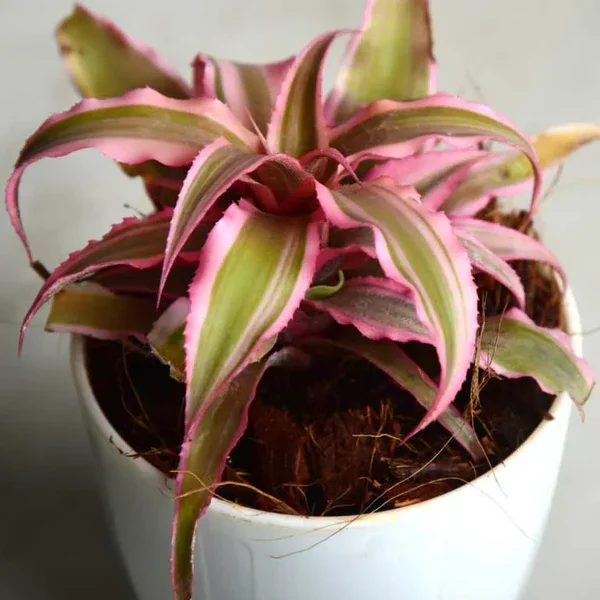
Cryptanthus, commonly known as Earth Stars, are fascinating terrestrial bromeliads renowned for their vibrant, star-shaped rosettes of foliage. Their intricate patterns and wide range of colors make them a unique and captivating addition to any plant collection.
🌸 Blooming and Propagation: Cryptanthus plants are monocarpic, meaning they bloom only once in their lifetime. After their bloom cycle, they begin to produce “pups” or baby plants. Cryptanthus are prolific propagators and can produce a significant number of pups from various parts of the plant, offering options to either divide them into individual plants or keep them together for a fuller, clumped display.
- Propagation: For successful propagation, the pup should be at least a quarter of the mother plant’s size before gently twisting and pulling it off. Allow the detached pup’s wound area to dry for a couple of days (this helps prevent rot) before potting. It may take about a month for roots to fully develop once potted.
☀️ Sunlight: Cryptanthus thrive in conditions similar to their rainforest origins, preferring indirect, dappled, or moderate light. They can tolerate a range of light conditions, from shadier spots up to brighter, filtered light. Avoid intense, direct sunlight, which can scorch their leaves and fade their vibrant colors.
💧 Water: These plants prefer to stay evenly moist, avoiding both waterlogging and becoming bone dry. Check the soil moisture before watering. Watering once or twice a week is generally sufficient, but this can vary based on your environment’s temperature and humidity. Always ensure that excess water drains out of the bottom of the pot.
🪴 Potting Mix: As terrestrial bromeliads, Cryptanthus need a very light, airy soil with excellent drainage to prevent rotting. A mix designed for bromeliads or orchids, or a custom blend of standard potting mix with plenty of perlite, coarse sand, or orchid bark, would be ideal.
🌱 Fertilizer: Cryptanthus are not particularly demanding when it comes to fertilizer. You can use general houseplant fertilizers, orchid fertilizers, or slow-release options during their active growing season (spring and summer). However, it’s crucial to avoid over-fertilizing, as this can harm the plant. Always dilute liquid fertilizers to half or quarter strength.
🌡️ Temperature & Humidity: These plants are quite tolerant of various temperatures, even some colder weather as long as it doesn’t freeze. However, they flourish best between 18°C−27°C (65°F−80°F). High humidity is crucial for Cryptanthus. If kept indoors, avoid drafty areas or placing them near heating/cooling vents that can rapidly dry out the plant. Misting with a spray bottle can help keep their foliage refreshed and boost humidity.
🐛 Possible Pests & Control: Cryptanthus are generally robust against pests, but like many houseplants, they can occasionally encounter common issues like mealybugs or scale.
- Control: Regularly inspect your plant. If pests are found, dab them with a cotton swab dipped in rubbing alcohol or apply neem oil spray.
🪴 Other Important Tips:
Removing Unwanted Growth: Ensure there’s no unwanted growth in the pot that might hinder soil aeration or nutrient absorption for your Cryptanthus.
Avoid Frequent Repotting: Similar to many plants, frequently changing the plant’s pot can stress it and potentially stunt its growth. Repot only when necessary, such as when the plant has outgrown its container or you are propagating pups.
Troubleshooting Common Cryptanthus Problems –
🍂 Brown or Crispy Leaf Tips/Edges / Faded Color: These often indicate environmental stress.
Low Humidity: A common cause of crispy tips/edges.
Too Much Direct Sun: Intense light can scorch leaves and cause colors to fade.
Underwatering: If the soil is consistently too dry, the plant may show signs of dehydration.
💛 Yellowing Leaves / Mushy Base: These are critical signs, typically pointing to overwatering or root rot.
- Overwatering: The most common cause of yellowing leaves and a soft, mushy base. Cryptanthus do not tolerate soggy soil.
Solution: Allow the soil to dry out more between waterings. Ensure the potting mix is very airy and drains exceptionally well. If root rot is suspected, gently unpot, inspect roots, remove any mushy parts, and repot into fresh, dry, well-draining soil.
🌱 Stunted Growth / No New Pups:
Insufficient Light: While tolerant of lower light, too little light can slow down growth and pup production.
Nutrient Deficiency: Although not heavy feeders, a lack of essential nutrients can affect overall vigor.
Root Issues: Poor root health due to compacted soil or root rot can prevent growth.
🟤 Leaf Spot / Rotting Base (Fungal):
- High Humidity with Poor Airflow / Waterlogging: Fungal issues can arise in overly wet or stagnant conditions.
By understanding these needs and providing appropriate care, your Cryptanthus will continue to display its unique beauty and even provide you with new “earth stars” to enjoy!