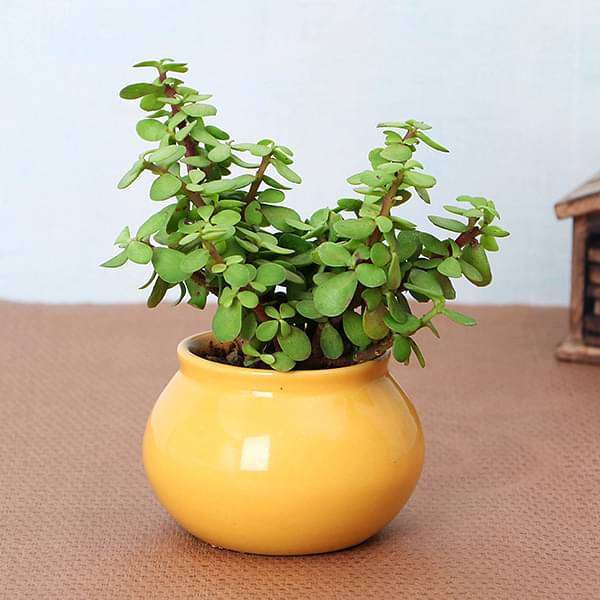
Jade Plant is a popular succulent cherished for its thick, glossy, oval-shaped leaves and tree-like growth habit. With proper care, it can live for many years and even be passed down through generations.
☀️ Sunlight: Jade Plant prefers bright, indirect light and can tolerate some direct morning sun. Placing it on a windowsill with filtered sunlight (e.g., behind a sheer curtain) is ideal to maintain its plump, vibrant, and glossy leaves. For optimal growth, aim for at least 3-4 hours of bright, indirect sunlight daily. A south-facing window is often an excellent spot, providing ample light. Avoid intense afternoon sun, especially in warmer climates, as it can cause sunburn, leading to brown edges or discolored leaves. Rotate your plant regularly to ensure all sides receive adequate light and to prevent uneven growth or sunburn on one side.
💧 Water: The most critical aspect of Jade Plant care is proper watering. Water only when the soil is completely dry to the touch. You can test this by inserting a finger about an inch or two into the soil, or for deeper assessment, use a wooden stick or skewer; if it comes out clean and dry, it’s time to water. Overwatering is the most common problem for Jade Plant, especially during humid monsoons, as it can quickly lead to root rot. In summer, watering once every 7-10 days is usually sufficient, but this can vary depending on temperature and humidity. Reduce watering significantly in winter when the plant is dormant.
🪴 Potting Mix: A cactus or succulent mix is ideal for Jade Plant, as it’s formulated for excellent drainage. Alternatively, you can create your own well-draining mix by combining garden soil with coarse sand, perlite, or crushed brick/grit (about 1 part soil to 1 part perlite/sand/grit). This ensures quick drainage and essential aeration for healthy root growth, preventing waterlogging.
🌱 Fertilizer: Fertilize your Jade Plant sparingly. Feed it once a month during the active growing season (spring and early monsoon/summer) using a balanced liquid fertilizer diluted to half strength. Do not fertilize during the winter months when the plant’s growth slows down significantly. Over-fertilization can burn the roots and harm the plant.
🌡️ Temperature & Humidity: Jade Plant prefers cool to average temperatures, ideally between 13°C – 24°C (55°F – 75°F). They are quite tolerant of dry air and do not require high humidity, making them excellent choices for most indoor environments. However, constant temperature fluctuations can stress the plant. Aim for a relatively stable environment.
🐛 Possible Pests & Control: Jade Plant are generally robust but may occasionally attract common succulent pests such as mealybugs, aphids, or scale insects.
- Control: For small infestations, you can remove pests by dabbing them directly with a cotton swab dipped in rubbing alcohol. For larger infestations or as a preventive measure, use neem oil spray regularly. Inspect your plant frequently to catch any pest issues early.
Troubleshooting Common Jade Plant Problems –
🍂 Brown Leaf Tips / 🔴 Red Leaves / 💛 Yellow Leaves / 🥀 Soft or Droopy Leaves / 🍃 Leaves Falling: These symptoms often overlap and indicate environmental stress or watering issues.
- Watering Issues (Over/Under-watering):
- Overwatering: This is the most frequent cause of yellowing leaves, soft/mushy leaves, and leaves falling off. If the bottom soil stays wet for too long (test with a stick), it’s a sign of overwatering and potential root rot. Reduce watering immediately and ensure proper drainage.
- Underwatering: Prolonged dryness can cause leaves to shrivel, become soft or droopy, and sometimes turn reddish-brown (brownish pigmentation). Water thoroughly when the soil is completely dry, but avoid extreme dehydration.
- Insufficient Light: Soft or droopy leaves, lack of vibrant color, and stretched-out growth (etiolation) can be signs of insufficient light. Try placing your plant in a brighter location, such as a south-facing window, ensuring it gets at least 3-4 hours of bright, indirect sunlight daily.
- Sunburn: While they like bright light, intense, direct afternoon sun can cause brown edges or scorched spots on the leaves. If your plant is showing red or brown discoloration, it might be getting too much direct sun. Rotate the plant regularly to ensure even light exposure and prevent one side from getting burnt.
- Temperature Variations: Constant or extreme fluctuations in temperature can stress the plant and lead to problems like droopy or falling leaves. Aim for a stable temperature range.
𓇢𓆸 Not Growing / Leaning Plant:
- Insufficient Light: If your plant isn’t growing much and appears leggy or stretched, it’s likely not getting enough light. Move it to a brighter location.
- Pruning Needs: Jade Plant benefits from regular pruning. If your plant is bushy, leaning, or losing its shape, it’s time to prune. Cut off leggy or overgrown branches (you can cut between leaf nodes). Pruning encourages bushier growth and a stronger stem.
- Propagation: The branches you cut off during pruning can be easily propagated to grow new Jade Plant! Allow the cuttings to callus for a few days before placing them in well-draining soil.
🟤 Leaf Spot:
- Fungal Infections: Fungal spots may arise in conditions of high humidity coupled with poor airflow or water sitting on leaves.
- Prevention: Ensure good airflow around your plant and avoid splashing water on the foliage when watering, especially in humid conditions. If spots appear, you can remove affected leaves to prevent further spread.
By understanding these signs and adjusting your care routine accordingly, your Jade Plant will flourish and become a beautiful, long-lasting addition to your home!