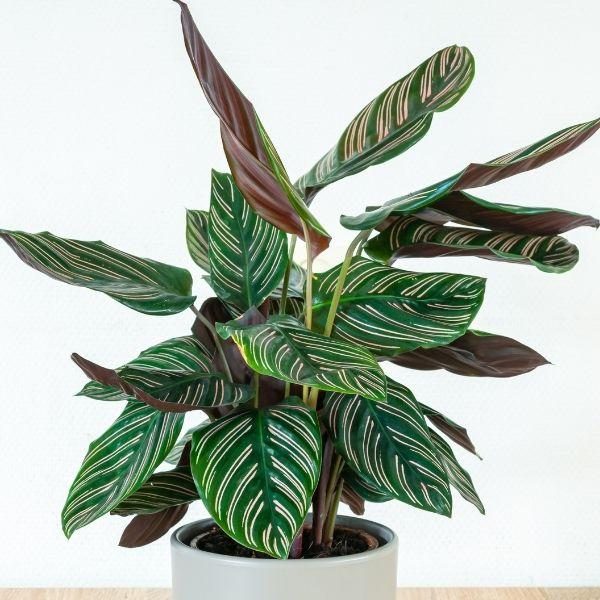
The Maranta plant, often called the Prayer Plant, is a captivating houseplant famous for its beautifully patterned leaves that fold upwards at night, resembling hands in prayer. Despite its intricate appearance, Marantas are generally considered easier to care for than Calatheas, making them a rewarding choice for plant enthusiasts, especially those who tend to overwater rather than underwater their plants.
☀️ Sunlight: Marantas can tolerate low light conditions, but they truly flourish in medium to high indirect light, which results in larger, more vibrant leaves and enhanced variegation. A spot near a north or east-facing window is often ideal. Variegated Marantas should preferably be kept in natural sunlight (indirect) to avoid potential changes in their variegation that can sometimes occur under artificial grow lights. Avoid direct sunlight, as it can scorch their delicate leaves and cause fading.
💧 Water: It is crucial not to let Maranta plants dry out, as this quickly leads to crispy edges and curling leaves. The video advises watering before the plant shows signs of dehydration. The soil should be consistently moist but never soggy. You can check the top inch or two of soil; if it feels slightly dry, it’s time to water. Ensure good drainage from the pot.
🪴 Potting Mix: A light and airy soil mix is ideal for Marantas. This type of mix allows for good drainage to prevent root rot while still retaining the necessary moisture. Adding perlite, orchid bark, or coco coir to a standard potting mix can achieve this balance.
🌱 Fertilizer: During their active growing season (spring through summer), feed your Maranta plant with a balanced liquid fertilizer diluted to half strength every 2-4 weeks. Reduce or cease fertilization during the cooler, dormant months of autumn and winter. Over-fertilizing can lead to salt buildup in the soil, which can harm the roots and cause leaf tip burn.
🌡️ Temperature & Humidity: Marantas thrive in average to warm room temperatures, ideally between 18°C−27°C (65°F−80°F). They are sensitive to cold and sudden temperature changes. High humidity environments are crucial for Maranta plants. A bathroom can be a good location if sufficient indirect sunlight is available. For drier areas, humidifiers are highly recommended. Grouping plants together or placing the pot on a pebble tray with water (ensuring the pot isn’t sitting in the water) can also help increase local humidity.
🐛 Possible Pests & Control: Spider mites are the most common pest that affects Maranta plants, often appearing when the plant is stressed by low humidity.
- Control: The best prevention is maintaining high humidity and consistent watering. Regularly inspect your plant, especially the undersides of leaves. If spider mites are present (tiny dots, fine webbing), wipe leaves with a damp cloth, use horticultural oil (like neem oil), or an appropriate insecticidal soap. Repeat treatments as necessary.
🌸 Flowering: Healthy Maranta plants may produce small, non-showy pink, purplish, or white flowers, typically in the springtime. While not the main attraction, these indicate a happy plant.
✂️ Pruning: Prune your Maranta to maintain its shape or encourage bushier growth. You can trim back leggy stems or remove any yellowing or dead leaves at their base using clean, sharp scissors.
🌱 Propagation: Marantas are easily propagated. The best method is by cutting below a node (the point where a leaf or new growth emerges) and rooting the cutting in water for several weeks before transferring it to soil. When transplanting a rooted cutting to soil, it’s important to keep the soil consistently moist to help the new plant establish.
🪴 Potting & Repotting: Ceramic or plastic pots are recommended to help keep the soil consistently moist, as they retain moisture better than porous terracotta pots, which would require more frequent watering. Repot your Maranta every 1-2 years or when it becomes root-bound, moving it into a pot that is only slightly larger.
⚠️ Toxicity: Marantas are non-toxic to humans and pets, making them a safe choice for homes with children and animals.
Troubleshooting Common Maranta Plant Problems –
🍂 Crispy Tips / Brown Edges:
🌿 Curled Leaves:
Cause: Chronic underwatering is the primary reason for leaves curling inwards. The plant is trying to conserve moisture.
Solution: Improve your watering routine immediately. Water thoroughly when the top 1-2 inches of soil feel slightly dry, ensuring consistency.
𓇢𓆸 Fading Color / Lighter Leaves:
Cause:
Too much direct sunlight: Intense light can bleach the vibrant patterns and cause colors to fade.
Spider mite infestation: Pests can damage leaves, leading to discoloration and dullness.
Nutrient deficiency: Lack of adequate nutrients can cause the leaves to lose their vibrancy.
Solution:
Move the plant to a location with medium to high indirect light.
Inspect for spider mites (tiny dots, fine webbing) and treat if present.
Ensure consistent fertilization during the growing season.
💛 Yellowing Leaves / Mushy Stems:
Cause: These are classic signs of overwatering and potential root rot. The roots are suffocating from too much moisture.
Solution: Immediately reduce watering frequency. Allow the topsoil to dry out more between waterings. Ensure the pot has excellent drainage. If root rot is suspected (mushy, smelly roots), unpot, trim affected roots, and repot in fresh, well-draining soil.
🕷️ Pests (Spider Mites):
Signs: Small dots on leaves, fine webbing, dull appearance, fading color.
Cause: Often appear when the plant is stressed, particularly by low humidity.
Solution: Maintain high humidity and consistent watering to deter them. Regularly shower the plant to remove dust and pests. For infestations, use horticultural oil (like neem oil) or insecticidal soap, following product instructions.
By understanding these unique needs and responding to its signals, your Maranta plant will thrive, delighting you with its vibrant foliage and charming “prayer” movements!