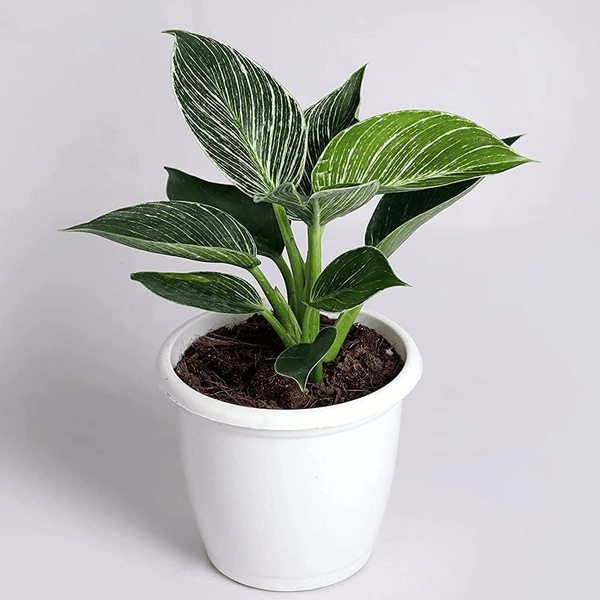
The Philodendron Birkin is a stunning and popular houseplant known for its distinctive dark green leaves dramatically streaked with creamy white or yellow variegation. Its elegant appearance and relatively straightforward care make it a favorite among plant enthusiasts.
☀️ Sunlight: Philodendron Birkin thrives in bright, indirect light. This type of lighting is crucial for maintaining its striking variegation. Placing it near an east or north-facing window, or a few feet away from a south or west-facing window with a sheer curtain, is ideal. Avoid direct sunlight, especially intense afternoon sun, as it can scorch the delicate variegated parts of the leaves, leading to brown spots or fading. Insufficient light, on the other hand, can cause the variegation to fade, leading to leaves becoming all green.
💧 Water: Water your Philodendron Birkin when the top 2 inches (5 cm) of soil feel dry to the touch. It prefers consistently moist soil but absolutely detests soggy conditions. Overwatering is a common problem, often leading to root rot. If the soil remains wet for too long, you might notice leaves turning yellow and eventually drying or falling. Always ensure that the pot has good drainage holes and that excess water drains away completely. Reduce watering frequency in winter when the plant’s growth slows down.
🪴 Potting Mix: Use a well-draining, airy potting mix that retains some moisture without becoming waterlogged. A mix formulated for aroids, typically containing ingredients like peat moss, perlite, coco coir, and some orchid bark or charcoal, works well. This type of mix provides good aeration for the roots and prevents compaction.
🌱 Fertilizer: During the active growing season (spring and summer), feed your Philodendron Birkin once a month with a balanced liquid fertilizer diluted to half strength. This will support its vigorous growth and help maintain its vibrant variegation. Avoid fertilizing in winter when the plant’s growth is dormant. Over-fertilization can lead to salt buildup in the soil, which can burn the roots and manifest as brown leaf tips.
🌡️ Temperature & Humidity: Philodendron Birkin prefers average to warm room temperatures, ideally between 18-29°C (65-85°F). Protect it from cold drafts and temperatures below 15°C (60°F), as it is sensitive to cold. This plant thrives in high humidity, mimicking its natural tropical environment. Insufficient humidity can lead to brown leaves or crispy edges. To increase humidity, mist the leaves every other day, use a pebble tray with water, or place the plant near a humidifier.
🐛 Possible Pests & Control: Philodendron Birkin can occasionally attract common houseplant pests such as spider mites, mealybugs, and aphids.
Spider Mites: Small dots on the leaves, often accompanied by fine webbing on the undersides, indicate a spider mite infestation.
Control: Regularly clean leaves with a damp cloth to remove dust and deter pests. Ensure sufficient humidity and good airflow, as spider mites thrive in dry conditions. For infestations, use an insecticide or miticide spray, or neem oil. Apply according to product instructions and repeat as necessary.
Troubleshooting Common Philodendron Birkin Problems –
🍂 Brown Leaves / Drying, Yellowing, or Falling Leaves: These symptoms often point to issues with watering or humidity.
Insufficient Humidity: Brown leaves, especially crisp edges or tips, indicate insufficient humidity.
Overwatering: Drying, yellowing, or falling leaves are a classic sign of overwatering. The roots are likely struggling or rotting due to too much moisture.
Solution: Allow the top 2 inches (5 cm) of soil to dry before re-watering. Ensure the pot has adequate drainage. If severe, consider repotting into fresh, dry soil after checking for and trimming any rotten roots.
Underwatering: While less common than overwatering, prolonged drought can also cause leaves to turn brown and crispy.
🌿 Leaves Become All Green / No Variegations: This indicates that the plant is not receiving enough light to maintain its beautiful variegation.
Unstable Variegation: The Birkin variegation is inherently somewhat unstable and can revert.
Insufficient Sunlight: The most common reason for leaves becoming all green or losing their variegation is insufficient light. The plant produces more chlorophyll to compensate for low light.
Humidity: While light is primary, ensuring sufficient humidity also contributes to overall plant health, which can support variegation.
🦠 Weird Lesions and Odor: These symptoms are severe and suggest a bacterial or fungal disease.
- “Erwinia Blight” or “Fire Blight” (Bacterial Soft Rot): These serious bacterial infections can cause mushy, foul-smelling lesions on stems and leaves.
- Solution: This is often difficult to treat. Immediately trim infected branches or leaves with pruning shears that have been dipped in isopropyl alcohol between cuts to prevent spread. Isolate the plant. Ensure good air circulation and avoid wetting the foliage. Discard severely infected plants to prevent spread to other houseplants.
By understanding these signs and adjusting your care routine accordingly, your Philodendron Birkin will continue to display its unique and beautiful foliage!