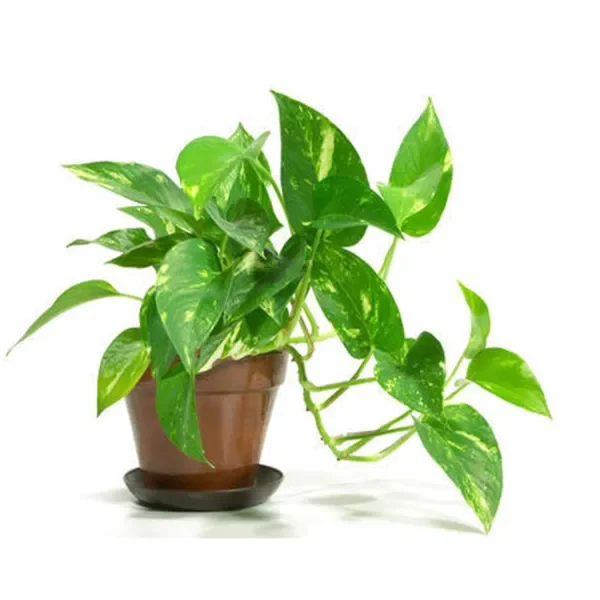
The Money Plant, commonly known as Pothos, is an incredibly popular and easy-to-care-for houseplant known for its cascading vines and heart-shaped leaves. Its resilience and adaptability make it an excellent choice for beginners and a beautiful addition to any indoor space.
☀️ Sunlight: Pothos grows well in low to medium light but flourishes in bright, indirect sunlight. It thrives near a north or east-facing window. Varieties with more variegation (white or yellow patterns) will maintain their coloring better in brighter, indirect light. Avoid placing it in direct afternoon sun, as intense sunlight can bleach or burn the leaves, leading to unsightly brown spots.
💧 Water: Water your Pothos when the top inch of soil dries out. You can check this by inserting your finger into the soil. During summers or warmer periods, this may mean watering once or twice a week, while in winter, it might be reduced to once a week or even less, depending on humidity and temperature. The goal is to keep the soil moist but never soggy. Always ensure that excess water drains out of the bottom of the pot to prevent root rot.
🪴 Potting Mix: Use a well-draining potting mix that allows for good aeration. A good blend consists of garden soil, compost, and cocopeat or coarse sand. Avoid heavy, compact soils that can retain excess water, as this can lead to root problems.
🌱 Fertilizer: Pothos are not heavy feeders. A mild liquid fertilizer every 4–6 weeks during the active growing months (spring and summer) will boost foliage growth. Avoid overfertilizing, especially in winter when the plant’s growth naturally slows down. Over-fertilization can lead to salt buildup in the soil, which can harm the roots and cause brown leaf tips.
🌡️ Temperature & Humidity: Pothos thrives in average room temperatures, typically between 18-35°C (65-95°F). They appreciate average to slightly higher humidity but are quite tolerant of normal household humidity levels. If your home is particularly dry, especially in winter, occasional misting or placing the plant near a humidifier can be beneficial, but it’s generally not a strict requirement.
🐛 Possible Pests & Control: Pothos plants are generally pest-resistant but may occasionally attract mealybugs or scale in areas with low airflow or high humidity.
- Control: Wipe leaves clean regularly with a damp cloth to remove dust and check for any early signs of pests. For infestations, use neem oil spray or dab pests directly with a cotton swab dipped in rubbing alcohol. Repeat treatment as necessary until pests are gone.
Troubleshooting Common Money Plant (Pothos) Problems –
🍂 Brown Leaf: Brown leaves indicate a watering issue, either too much or too little.
- Underwatering: If the older leaves are turning brown and crispy, it’s usually a sign of underwatering. The plant is drying out too much between waterings.
- Solution: Water thoroughly when the top inch of soil feels dry. Check the soil moisture before watering; don’t just stick to a rigid schedule. For severely underwatered plants, ensure you are watering adequately (e.g., once every three days in peak summer, adjust as needed).
- Overwatering: If the leaves first turn yellow and then brown and become mushy, it’s an indication of overwatering leading to root issues.
- Solution: Allow the soil to dry out more between waterings. Ensure proper drainage.
- Low Humidity: Brown leaf tips can also be caused by low humidity.
- Solution: Mist the plant in dry environments or place it near a humidifier.
- Salt Buildup: Brown tips can also be due to a buildup of salts from fertilizer or tap water.
- Solution: Occasionally flush the soil by watering thoroughly until water runs out of the drainage holes for several minutes.
💛 Yellow Leaf: Yellow leaves are a classic sign of overwatering or insufficient light.
- Overwatering/Root Rot: If all leaves are turning yellow, especially new growth, it’s often a sign of root rot due to consistently wet soil.
- Solution: Immediately reduce watering frequency. If root rot is severe, you may need to cut the healthy green parts with stems to propagate new plants. Allow the soil in the pot to dry out completely. You can also poke holes in the soil with a stick or skewer to improve aeration.
- Insufficient Light: Low light can also cause yellowing, especially if older leaves are turning yellow without signs of mushiness.
- Solution: Move the plant to a brighter area with enough indirect light. Do not place it in direct sunlight, which can burn leaves.
- Normal Aging: It’s normal for older, bottom leaves to yellow and eventually die as part of the plant’s natural life cycle.
- Solution: Remove the yellow leaves as they are going to die anyway to direct energy to new growth.
🥀 Droopy Leaves / Curling: These symptoms indicate the plant is stressed, most commonly due to watering issues.
- Underwatering: Droopy leaves are usually a clear sign of underwatering. The plant wilts when it’s thirsty.
- Solution: A quick, thorough drink typically revives it within a few hours. Also, check the root zone for tightness (root-bound) or pests that might hinder water uptake.
- Overwatering: Paradoxically, overwatering also causes droopy leaves because the roots are suffocated and cannot properly absorb water. The leaves might feel soft and look somewhat swollen.
- Solution: Adjust watering frequency to allow the soil to dry out between waterings.
- Root Zone Confusion: Pothos can be grown in soil or water. If you are transferring a plant between mediums, ensure it is fully committed to one. Don’t put them in both (e.g., soggy soil with standing water) to confuse the plants and stress the roots.
- Curling Leaves: Curling leaves can sometimes indicate underwatering, as the plant tries to conserve moisture. It can also be a sign of too much light, though less common for Pothos which prefer indirect light.
𓇢𓆸 Not Growing: Several factors can contribute to stunted growth.
- Insufficient Light: Pothos need enough indirect light to photosynthesize and grow. If your plant is in a very dim corner, it will grow slowly or stop altogether.
- Solution: Move to a brighter spot with indirect light.
- Not Enough Space/Pot: If the plant is root-bound (roots are circling tightly in the pot), it won’t have enough space for new root or foliage growth.
- Solution: Consider repotting into a slightly larger pot.
- Not Enough Fertilizer: While not heavy feeders, a lack of essential nutrients can slow down growth.
- Solution: Ensure you are providing mild liquid fertilizer every 4-6 weeks during the growing season.
By understanding these signs and adjusting your care routine accordingly, your Pothos (Money Plant) will continue to thrive and bring lush greenery to your home!