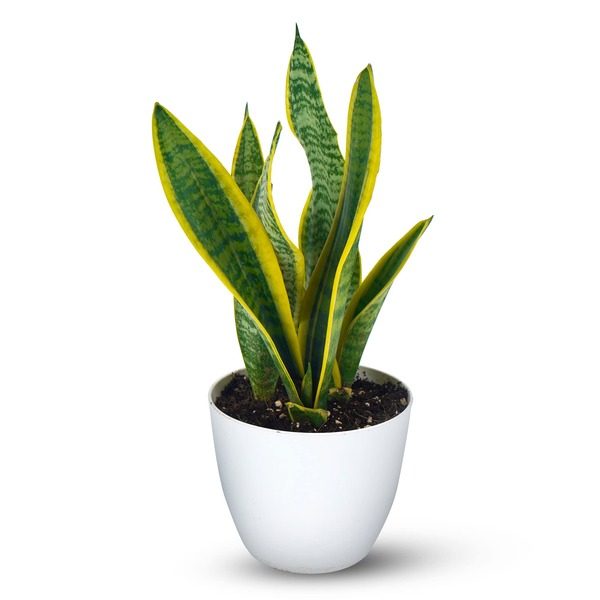
The Snake Plant, also known as Mother-in-Law’s Tongue, is a popular and remarkably resilient houseplant. It’s famous for its upright, sword-like leaves and ability to tolerate a wide range of conditions, making it an excellent choice for beginners and busy plant parents.
☀️ Sunlight: Snake Plants are highly adaptable and can tolerate various light levels, from low light to bright, indirect light. For optimal growth and to encourage vibrant leaf patterns, provide bright, indirect sunlight. They can handle some direct morning sun, but avoid prolonged exposure to harsh afternoon sun, which can scorch the leaves. While they survive in low light, growth will be slower and variegation may be less pronounced.
💧 Water: Underwatering is always better than overwatering for Snake Plants. Allow the soil to dry out completely between waterings. This usually means watering every 2-4 weeks, depending on the season, humidity, and light conditions. In winter, when the plant is dormant, watering can be reduced to once a month or even less. Overwatering is the leading cause of problems for Snake Plants, often leading to root rot. When watering, ensure water drains out of the bottom of the pot.
🪴 Potting Mix: Use a well-draining potting mix to prevent waterlogging. A cactus or succulent mix is ideal. If using a standard potting mix, amend it with perlite, coarse sand, or crushed brick/grit to improve drainage and aeration. Good drainage is crucial for healthy root development and to prevent root rot.
🌱 Fertilizer: Snake Plants are not heavy feeders. Fertilize sparingly, if at all. During the growing season (spring and summer), you can feed them once a month with a balanced liquid fertilizer diluted to half strength. Avoid fertilizing in winter when the plant’s growth slows down. Over-fertilization can lead to a buildup of salts in the soil, which can harm the roots.
🌡️ Temperature & Humidity: Snake Plants thrive in average room temperatures, ideally between 18°C – 35°C (65°F – 95°F). They are quite tolerant of dry air and do not require high humidity, making them well-suited for most indoor environments. Protect them from sudden drops in temperature or cold drafts, especially during winter.
🐛 Possible Pests & Control: Snake Plants are generally pest-resistant. However, occasionally they might encounter mealybugs or spider mites.
- Control: If pests appear, wipe them off with a damp cloth or a cotton swab dipped in rubbing alcohol. For more persistent issues, use a neem oil spray or insecticidal soap. Regular inspection helps catch any issues early.
Troubleshooting Common Snake Plant Problems –
𓇢𓆸 Not Growing:
- Horizontal Growth: Snake Plants tend to grow horizontally by spreading rhizomes. If you want it to grow taller and more contained, consider placing it in a small to medium-sized pot. This restricts horizontal spread and encourages upward growth.
- Repotting: To encourage continued growth and prevent it from becoming root-bound, consider repotting your Snake Plant every two years into a slightly larger pot, or when you notice roots circling the inside of the pot.
🍂 Brown Leaf / 💛 Turning Yellow: These are common indicators of stress, often related to watering or light.
- Overwatering: This is the most common cause of yellowing leaves and soft, mushy brown spots. If you suspect overwatering, allow the soil to dry out completely before the next watering, and ensure good drainage.
- Root Rot: If the leaves are turning yellow rapidly, especially older ones, and the base feels soft or smells foul, check for root rot. See “Rotting / Droopy Leaves” for detailed steps.
- Hardened Soil: If the soil has become compacted and hard, it can hinder water and nutrient absorption. Try changing the soil mix to a looser, well-draining one to improve aeration.
- Normal Aging: It’s normal for older, outer leaves to gradually turn yellow and eventually die off as the plant ages. You can simply cut these off.
- Indirect Light: While they tolerate low light, a lack of adequate light can sometimes contribute to general decline and yellowing. Try to provide bright, indirect light for optimal health.
- Cutting Yellow Parts: You can cut off the yellow parts of the leaf if only a portion is affected. Use clean, sharp scissors and cut at an angle to maintain the leaf’s natural shape.
🟫 Rotting / 🥀 Droopy Leaves: These are critical signs, most often due to overwatering.
- Majorly Because of Overwatering: Consistently soggy soil is the primary culprit. Reduce watering frequency significantly. Try watering once every 2-4 weeks, ensuring the soil is completely dry between waterings.
- Checking Roots: Carefully remove the plant from its pot and check the roots. Healthy roots are firm and white or light tan. If they are mushy, black, or have a foul odor, it’s likely root rot or a fungal infection.
- Treatment for Root Rot:
- Remove the soil from around the roots.
- Trim off all affected, mushy, or foul-smelling roots using sterilized scissors.
- For added measure, you can spray the roots with a diluted solution of hydrogen peroxide (e.g., 1 part 3% hydrogen peroxide to 2 parts water) to kill remaining bacteria or fungi.
- Prepare fresh, well-draining soil mix and replant it in a clean pot (sterilize the old pot if reusing it). Avoid watering for a few days after repotting to allow any cuts to heal.
🌿 Leaf Curling:
- Underwatering: Leaf curling is a strong indicator of underwatering or severe dehydration. The plant is trying to conserve moisture.
- Generous Watering: Provide a thorough watering when you notice the leaves curling. Ensure the water drains completely from the bottom of the pot. The leaves should plump up and uncurl within a few days.
- Root-Bound: If the plant is consistently dry and the roots are circling tightly around the inside of the pot, it may be a sign that the plant needs a bigger pot. The roots are too dense to efficiently absorb water. Repot into a slightly larger container with fresh, well-draining soil.
By understanding these signs and adjusting your care routine accordingly, your Snake Plant will remain a resilient and attractive feature in your home!