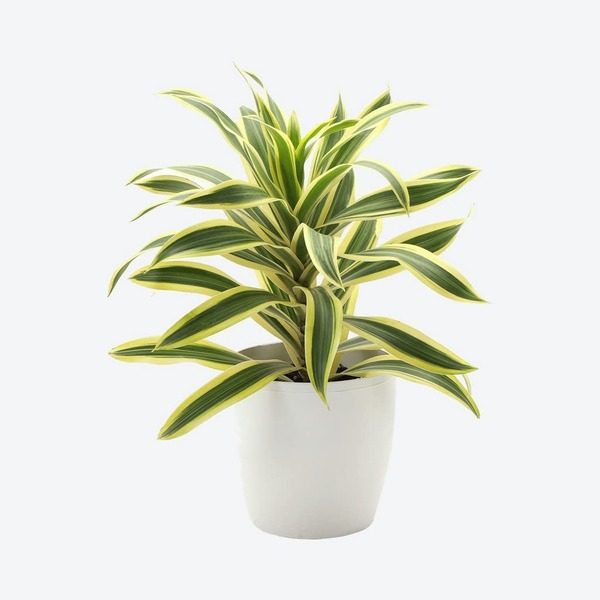
The Song of India (Dracaena Reflexa) is a popular and striking houseplant, admired for its vibrant green and yellow variegated leaves that spiral around its woody stems. Its exotic appearance and relatively easy care make it a great choice for adding a tropical touch to indoor spaces.
☀️ Sunlight: The Song of India plant prefers bright, indirect light. Place the plant where it receives ample bright light throughout the day, but not direct, intense sunlight all day, especially harsh afternoon sun. Too much direct sun can scorch the leaves, leading to faded colors or brown spots. While it can tolerate lower light levels, its variegation will be less vibrant, and growth may slow down.
💧 Water: Water your Song of India when the top 1-2 inches of soil feel dry to the touch. It’s crucial to avoid both overly wet and very dry soil. Before watering, check the soil moisture by inserting your finger into the pot. While consistency is good, avoid rigid schedules and always let the topsoil dry out. Avoid waterlogged soil at all costs, as this is a primary cause of root rot. In the evening, if the soil is dry, you can water, adjusting the frequency to your local climate and humidity levels.
🪴 Potting Mix: Use a well-draining potting mix that allows for good aeration. A standard houseplant mix amended with perlite, sand, or a bit of coarse bark is ideal to ensure proper drainage and prevent water from sitting around the roots.
🌱 Fertilizer: During the active growing season (spring and summer), feed your Song of India plant with a balanced liquid fertilizer diluted to half strength, typically once every 2-4 weeks. Avoid fertilizing in winter when the plant’s growth is dormant. Over-fertilization can lead to salt buildup in the soil, which can contribute to brown leaf tips.
🌡️ Temperature & Humidity: Song of India plants prefer average to warm room temperatures, ideally between 18-29°C (65-85°F). They are sensitive to cold and should be protected from temperatures below 15°C (60°F) and cold drafts. These plants appreciate moderate to high humidity. If your indoor air is dry, especially during winter, consider misting the leaves regularly, using a pebble tray with water, or placing a humidifier nearby to prevent brown leaf edges.
🐛 Possible Pests & Control: Song of India plants can occasionally be affected by common houseplant pests such as spider mites, mealybugs, and scale insects.
Control: Regularly inspect your plant for any signs of pests. If detected, wipe leaves clean with a damp cloth. For infestations, use neem oil spray or insecticidal soap, following product instructions. Good air circulation can also help deter pests.
Troubleshooting Common Song of India Plant Problems –
🍂 Brown Leaf Edges or Tips (Necrosis): Brown leaf edges or tips are a common issue, scientifically known as necrosis, and indicate stress or sickness in the plant.
Instant Solution (Trimming): Brown leaf edges are irreversible, so it is recommended to trim the brown portions using sanitized scissors while maintaining the natural leaf shape. If half or most of a leaf turns brown or yellow, it’s better to remove the entire leaf at its base. Trimming can be applied to yellow, brown, or black leaf edges any time of the year with clean, sharp tools.
Reasons for Brown Leaf Edges (Identifying the Cause): Trimming is not a permanent solution, as brown leaves indicate an underlying problem. We need to identify the specific factor causing the problem to provide proper care. Common causes include:
Watering Problem:
Too Much Water: Can lead to root rot, which indirectly causes brown tips as the roots can’t absorb water.
Too Little Water: Consistent underwatering or allowing the soil to dry out excessively between waterings can also stress the plant, leading to brown tips.
Low Humidity: High humidity (or rather, sudden drops to low humidity) is a significant factor. If the air is too dry, the leaf tips will turn brown.
High Heat: Excessive heat can also contribute to leaf browning.
Mineral Buildup in Water: Some plants, including Dracaenas, are sensitive to minerals like fluorine, chlorine, and sodium salts found in tap water, which can accumulate in the soil and cause brown leaf tips.
Solution: Consider using filtered water, distilled water, or rainwater, or letting tap water sit out overnight to allow chlorine to dissipate. Occasionally flush the soil thoroughly to prevent salt buildup.
Lack of Nutrients: While less common than watering issues, prolonged nutrient deficiency can weaken the plant and make it susceptible to stress-related browning.
Pest Infestations: Certain pests can also cause damage that manifests as brown spots or tips.
💛 Turning Yellow: Yellowing leaves are usually a sign of overwatering or other environmental stress.
Overwatering: Yellow leaves along with mushy stems are a strong indicator of overwatering leading to root rot.
Underwatering: Yellow leaves with dry and crisp edges (often accompanied by browning) indicate underwatering.
Nutrient Imbalance: A general yellowing can sometimes point to a nutrient imbalance or deficiency.
Normal Aging: It’s normal for older, lower leaves to gradually turn yellow and drop off as the plant matures.
🌿 Removing Unwanted Growth / Soil Management:
Removing Unwanted Growth: Regularly remove any unwanted growth in the pot (like weeds or suckers) that might hinder soil aeration or compete for nutrient absorption, ensuring the plant’s resources are directed to healthy growth.
Soil Management: Check the soil moisture regularly. If it’s dry, you can water, adjusting to your local climate. Avoid waterlogged soil at all costs.
🌱 Avoid Frequent Repotting:
- Stunted Growth: Frequently changing the plant’s pot can stunt its growth, as it stresses the root system. Repot only when the plant is clearly root-bound (roots circling the pot, water draining too quickly, plant becoming top-heavy) or every 2-3 years to refresh the soil.
🦠 Fungicide or Turmeric Application:
- Fungal Attack: If there are signs of a fungal attack (e.g., unusual spots, powdery mildew, mushy areas), take action.
Solution: Spray a fungicide specifically designed for houseplants according to product instructions, or as a natural alternative, you can add a small amount of turmeric to the soil, as it has antifungal properties. Ensure good air circulation.
💀 Dying:
- Untreated Problems: If any of the above-mentioned problems – severe watering issues, pest infestations, extreme temperature stress, or fungal attacks – are not treated promptly and effectively, those may kill the plants. Regular observation and quick intervention are crucial for the Song of India’s long-term health.
By understanding these signs and adjusting your care routine accordingly, your Song of India plant will remain a beautiful and vibrant centerpiece in your home!