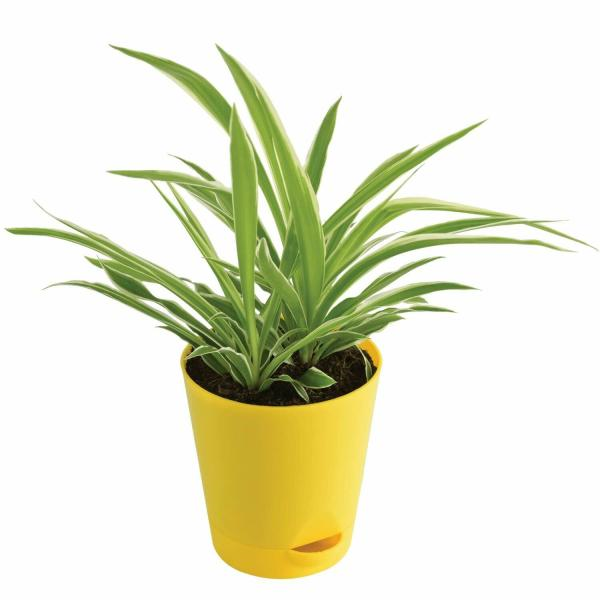
Spider Plants are popular and relatively easy-to-care-for houseplants, known for their arching leaves and “spiderettes” (plantlets) that dangle from the mother plant. Follow these tips to keep your Spider Plant healthy and thriving:
☀️ Sunlight: Spider Plants thrive in bright, indirect sunlight. They tolerate lower light conditions but exhibit their best growth and produce more spiderettes when placed near an east-facing window. A south-facing window with filtered light (e.g., through a sheer curtain) can also work. Avoid exposing them to harsh afternoon sun, especially during summer, as intense direct light can scorch their delicate leaf tips, turning them brown.
💧 Water: Water your Spider Plant when the top inch of soil feels dry to the touch. This typically translates to watering 1-2 times per week during the active growing season (spring and summer) and less frequently in winter when growth slows. Avoid overwatering at all costs, as persistently soggy soil is the primary cause of root rot, which can quickly kill your plant. Ensure the pot has adequate drainage holes.
🪴 Potting Mix: Use a well-draining potting mix that retains some moisture without becoming waterlogged. An ideal mix consists of garden soil, compost, and a good amount of river sand or perlite (about 1 part of each). This combination provides good aeration for healthy root growth while preventing the soil from becoming too dense.
🌱 Fertilizer: Feed your Spider Plant once a month with a diluted liquid fertilizer during the growing season (spring and early monsoon/summer). Look for a balanced fertilizer that provides essential nutrients like Nitrogen (N), Phosphorus (P), and Potassium (K). Avoid fertilizing in winter when the plant’s growth naturally slows down. Over-fertilization can harm the plant, so always dilute according to package instructions.
🌡️ Temperature & Humidity: Spider Plants grow best in cool to average room temperatures, generally between 18-24°C (65-75°F). As they are native to tropical areas, they appreciate moderate to high humidity. If your home’s air is dry, especially in winter due to heating, consider misting your plant occasionally, placing it near a humidifier, or setting its pot on a pebble tray filled with water (ensure the pot isn’t sitting directly in the water).
🐛 Possible Pests & Control: Spider Plants are generally pest-resistant, but they can sometimes attract common houseplant pests like aphids, spider mites, or mealybugs.
- Control: These pests can usually be controlled effectively using a neem oil spray or a mild soap solution (mix a few drops of dish soap with water). Apply the solution to the affected areas, ensuring complete coverage. Repeat every few days until the pests are gone. Regularly inspecting your plant will help catch infestations early.
Troubleshooting Common Spider Plant Problems –
🍂 Brown Leaf Tips / 💛 Yellowing Leaves: These are common issues often linked to environmental factors or watering practices.
- Overwatering/Poor Drainage: Do not overwater, as this can lead to root rot. Ensure your potting mix drains well and your pot has drainage holes.
- Root Rot: If you suspect root rot due to consistent overwatering, carefully remove the plant from its container. Inspect the roots; healthy roots are firm and white. Cut away any soft, mushy, or black diseased parts of both leaves and roots using sterilized scissors. Repot the plant in a different, clean container with fresh, well-draining potting mix.
- Dry Air/Low Humidity: Brown tips are frequently caused by dry air. Maintain humidity around your plant, especially in arid environments.
- Water Quality: Fluoride or chlorine in tap water can cause brown tips and yellowing. If possible, use filtered water, distilled water, or rainwater. Letting tap water sit out for 24 hours before watering can help dissipate some chlorine.
- Inconsistent Watering: Erratic watering (letting the soil dry out completely then drenching it) can also stress the plant. Aim for consistent moisture.
- Too Much Sun Exposure: While they like bright light, excessive direct sunlight, especially from a west-facing window or during intense afternoon sun, can scorch leaves and cause brown tips. An east or south-facing window with filtered light is ideal.
🥀 Droopy Leaves: Droopy leaves usually signal a watering issue or root stress.
- Underwatering: If the soil is consistently dry, droopy leaves may indicate underwatering. Ensure the soil is evenly moist but never soggy.
- Overwatering: Paradoxically, overwatering can also lead to droopy leaves as it suffocates the roots and prevents water uptake. Water only when the top layers of soil feel dry.
- Nutrient Deficiency: While less common, a lack of essential nutrients can also cause general plant stress leading to droopy leaves. Ensure you are providing adequate fertilizer once a month during the growing season, ensuring the plant gets a balanced supply of Nitrogen, Phosphorus, and Potassium. However, do not over-fertilize, as this can burn the roots and kill the plant.
- Root-bound: If the plant is severely root-bound, the roots may not be able to absorb enough water and nutrients, leading to droopy leaves.
𓇢𓆸 Not Growing / Dying: These are critical signs that your plant needs attention.
- Root-Bound: If your plant isn’t growing and appears stunted, it might be root-bound. Carefully remove it from its pot to check if the roots are circling the pot excessively. If so, repot it into a larger container (one size up) with fresh potting mix.
- Dried Roots: If the soil has been allowed to dry out completely for an extended period, the roots may have dried out. After removing the plant from the soil, soak the entire root ball in water for about 10 minutes to rehydrate them before repotting.
- Overwatering/Root Rot: As mentioned above, overwatering leading to root rot is a major killer. Follow the advice under “Brown Leaf Tips / Yellowing Leaves” for addressing root rot.
- Lack of Light: Insufficient light can also hinder growth. Ensure your plant is receiving adequate bright, indirect light.
🟤 Leaf Spot: Spots on leaves are typically due to fungal infections, often caused by excess moisture on the foliage.
- Prevention: Ensure good airflow around your plant and avoid splashing water on the foliage when watering, especially in humid environments. If spots appear, you can remove affected leaves to prevent further spread.
By paying attention to these comprehensive tips, you can help your Spider Plant flourish and produce its characteristic beautiful foliage and charming spiderettes!